From Promotion to CEO: How to Dress for Every Step of Your Career Ladder
We’ve all heard the old saw:
“Dress for the job you want, not the job you have!”
But as you probably know, it’s not always that simple.
You need to make an impression…
But not just a good impression.
The right impression for the moment, the position, the audience.
You obviously want to look good, but you also want to fit in, hint at your personal merit, and most likely impress specific people. You want your office outfits to be above expectations, but you don’t want to out-dress your boss.
How do you send all the right signals with your style–while still fitting your body, your budget, and your personal comfort zone?
Today I’m going to show you a few essential outfits that will help you pull it off.
In this article, we'll look at 5 different steps on the career ladder, and what to wear for each one to make sure you're on the way up.
#1. How To Dress For A Promotion
Take your cues from the people who rank just above you at your company. Be inspired by how they dress – don’t copy it slavishly, and don’t overdress.
Change up the default uniform almost imperceptibly, so you stand out but people don’t know why. Subtle patterns will help you stand out, but make sure they don’t clash.
Choose dark colors like black, burgundy, charcoal, and navy to convey authority and be taken seriously. Limit bright colors and pastels to one piece (e.g., shirt worn under a suit).
Get your clothes tailored to fit you. I can't emphasize this enough – fit is king. Cheap clothes that fit will look much better on you and give you much more presence than expensive clothes that don't.
Many offices now have an open-neck shirt and no-tie dress code. To elevate this, wear good quality tailored separates and a shirt collar stiff enough to stand up without a tie.
Obviously, the look here depends on the job you’re going for, but here’s a good business casual outfit for the ambitious man:
Lightly patterned or textured sports coat
Navy or khaki dress pants
Blue and white stripe dress shirt
(If worn at your office) Red silk tie to convey power and make you more persuasive
Statement watch
Brown or oxblood double monk strap shoes – to help you stand out when everyone else is wearing Derbys and Oxfords
Leather briefcase (no backpacks.)
Smart professional haircut, maintained regularly. Professional hair should be office-ready with just a comb-through – it shouldn't need hours of styling and gallons of product.
Signature cologne – look for a ‘daytime’ fragrance or one that can go from day to night.
Err on the side of overdressing rather than underdressing. The definition of overdressing varies – tech firms and startups will have a more casual dress code than law firms or banks.
Find the right level of overdressing based on social research. Google the company and see what people say about the company culture on Glassdoor and LinkedIn. If you visit the company or meet people from there before the interview, observe how they dress.
Few employers will turn you away for wearing this:
– A two-piece suit in a solid dark color (either charcoal gray or navy) with two or three buttons, regular flap pockets, single-breasted jacket with a notched lapel, and a single or double back vent.
Plain white, light blue or light pink dress shirt.
A silk tie in a conservative color like navy, brown, dark green, burgundy – either plain or with a simple repeating pattern. Red can look too cocky, so dark red is a good compromise.
Black cap toe Oxfords (for charcoal gray suits) or dark brown (for navy suits)
Dark socks – match either your pants or your shoes
Smart wristwatch (helps you look – and even BE – more punctual)
ATOUCH of manly cologne (earthy, woodsy, or spicy) as this has been shown to help interview prospects – but don’t overdo it.
Get your hair cut a week or two before (not the day before – it’ll look better and you’ll be more relaxed when it’s had time to settle, especially if it’s a new cut you're not used to styling.)
For more laid-back companies where you're not sure if the dress code is casual or business casual, you need to overdress just enough without blowing it out of the water. Nobody will hire you if you show up at a tech firm in a three-piece suit when everyone else is in black jeans and amusing t-shirts.
A good halfway house is to wear a dress shirt with the top two buttons undone, no tie, and a vest – research to see if you want to be wearing a button vest or a sweater vest.
#3. How To Dress For A Management Position
Congratulations – you got the job. Don’t rush out and upgrade your whole wardrobe at once. Go piece by piece and get a feel for your new style, otherwise, you’ll end up buying things you don’t wear.
Shoes are a great place to start. A good outfit with cheap, shabby, or inappropriate shoes says ‘upstart imposter’, a not-so-good outfit with fantastic shoes says ‘my bespoke suit is at the dry cleaner’s’.
You want your clothing to send a message of authority and trust, and to build rapport with people you work with. Don't dress so far above their level that you seem arrogant or out of touch. Most management roles call for smart business casual attire rather than a suit. Try this:
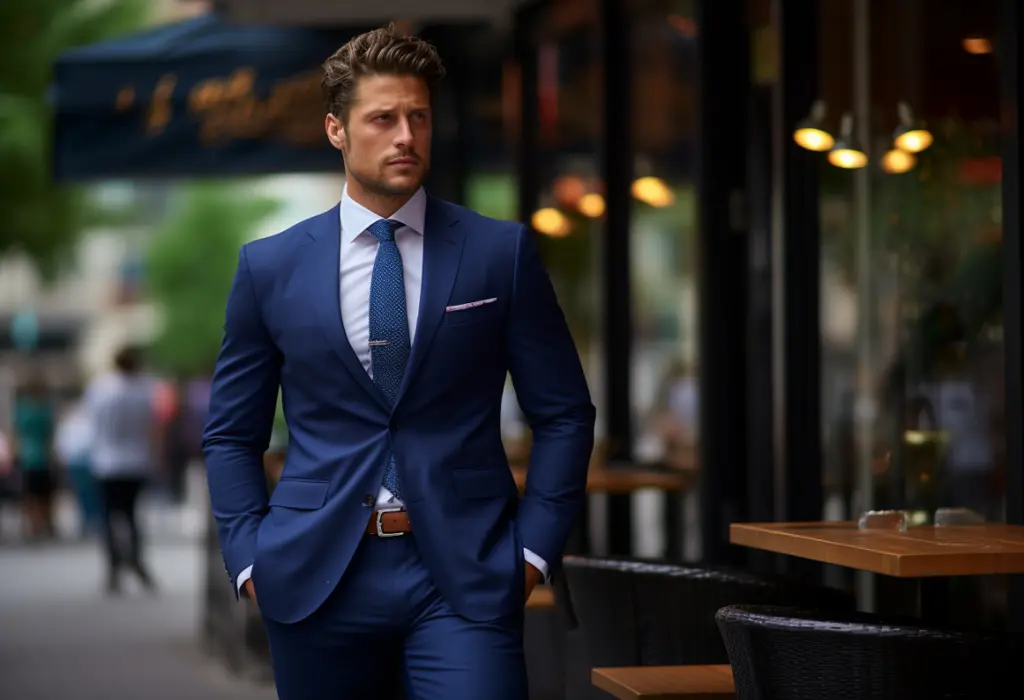
Navy sports coat
Grey flannel trousers
Blue or white dress shirt
Silk tie, in a solid color or a small pattern – dark blue is a good choice to convey reliability.
Coordinating (not matching) pocket square
A classic, understated watch that looks smart rather than sporty, with a simple, uncluttered dial and a metal or leather strap.
Tie bar (match your metals – no silver and gold in the same outfit)
Dress belt – a slim leather belt about 1.25″ wide with a plain buckle. Again, match your metals, and your leathers too – no black leather with brown.
Brown or oxblood leather Bluchers, Oxfords, or Derbys
Leather briefcase (I'll say it one more time… no backpacks.)
#4. How To Dress For The Boardroom
Your career is going GREAT – you’ve been promoted to the C-suite. Or maybe you’ve just started being invited to meetings in the C-suite. Either way, you need to know the rules of the ‘Boardroom Formal’ dress code.
Most image consultants still use terms like “business formal” or “business professional,” but there is a difference between everyday professional wear and what you should be wearing in the boardroom.
At this level, you’re likely to be meeting face-to-face with customers, clients, senior management, and key stakeholders. You’re expected to project a professional image and convey executive presence.
The keywords are QUALITY and CONSERVATIVE. Some advice from Shakespeare:
‘Costly thy habit as thy purse can buy, But not expressed in fancy—rich, not gaudy, For the apparel oft proclaims the man.’
Here are the rules:
Navy, black, or charcoal suit – plain or pinstriped. At this level, it should be AT LEAST made to measure, if not bespoke, and should definitely be in wool or a silk-wool blend. No polyester.
A top quality white dress shirt. It should be perfectly fitted and made from pure cotton that feels good to touch. The collar should fold over in a relaxed and natural fashion, cuffs should be free from wrinkles or folds – and if you want to wear French cuffs, you can go for it. Pair with…
Understated metal cufflinks or silk knots, nothing flashy or novelty.
Subtle-patterned silk tie. It’s also time to start looking for real quality in your ties – handmade is best. Quick tips: drape it over your hand to make sure it hangs straight, make sure the silk feels smooth, and look for a horizontal stitch called a bar tack holding the two sides together, which is often absent on mass-produced ties.
Coordinating (not matching) silk pocket square
Tie bar
Dress belt
Subtle-patterned socks
Black Oxfords or Derbys. These should be status symbol shoes. Look for handmade shoes in full grain leather or calfskin. At this level of formality, you have the option of wearing whole cut Oxfords.
A very nice watch – you might want to celebrate by buying that big-name heirloom brand watch.
Quality attaché case in black leather
#5. How To Dress When You’re The CEO
You made it all the way to the top. Now YOU make the rules. You have the freedom to express yourself more.
If you want to grow long hair and a beard like Richard Branson, or wear a uniform of jeans and a turtleneck like Steve Jobs, you can. In fact, studies show that if you’re in a prestigious position, dressing to stand out increases perceptions of your status and competence.
On the other hand, as a CEO you ARE the company. The impression you create can decide your company’s future. So you can look different – but you’d better look good.
Again, don’t leap into dressing completely differently overnight – especially if you’ve won the CEO role through promotion, and your employees already know you and are used to how you dress. You don’t want them to think power has gone to your head. Just try one or two of these changes at once:
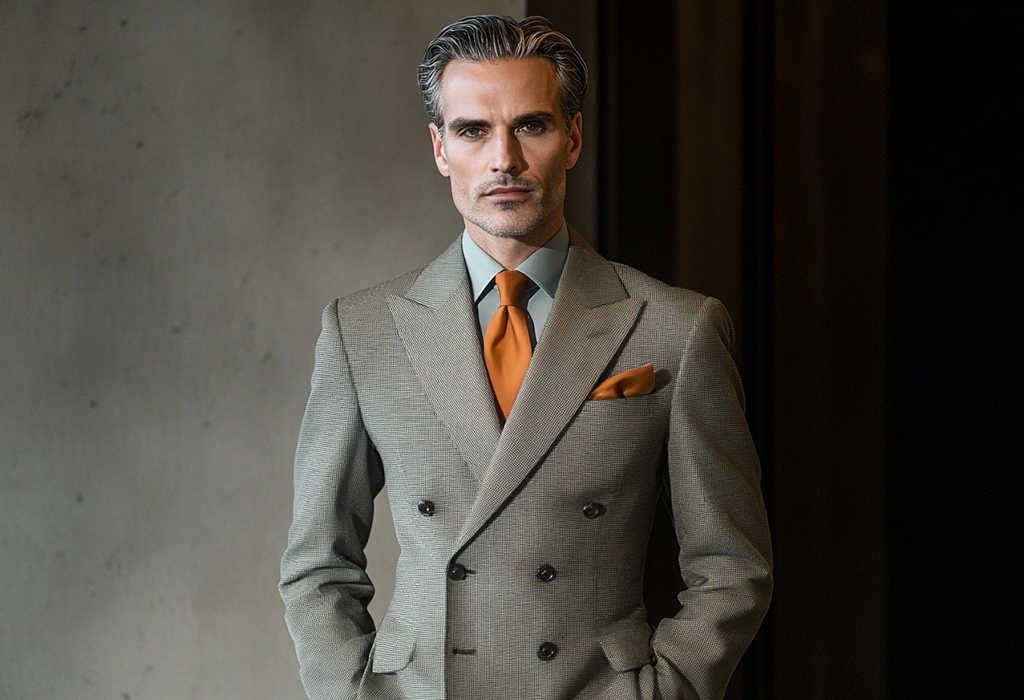
Try introducing more personal touches to your suits, such as peak lapels or a windowpane or Prince of Wales check instead of pinstripes.
Ease away from the solid white and light blue shirts and incorporate some daring colors and stripes – narrow at first then bolder as you feel more comfortables.
Try wearing ties in bright colors or bold patterns, or from an exclusive designer. Steer clear of novelty ties.
Colorful or graphic suspenders, pocket squares, cufflinks and even colorful socks can provide subtle personal touches.
Shoes should still be status symbol quality, but you can now have a little fun with them. Consider a two-tone Oxford or an unusual color such as a dark blue.
I'm Antonio Centeno, the founder of RMRS. I'm a former Marine Corps Officer with a BA in Evolutionary Biology and Philosophy (Cornell College 98') and an MBA from The University Of Texas at Austin (07'). I studied the Science of Style in London, Hong Kong, and Bangkok and have created over 5000 videos/ articles to help men dress better. Click here to discover more about me and our mission here at RMRS.
Ready to earn more money and command respect with the right clothing? Want to start dressing sharp today? Click here to discover The Style System , the BEST Professional Style Course on the planet!