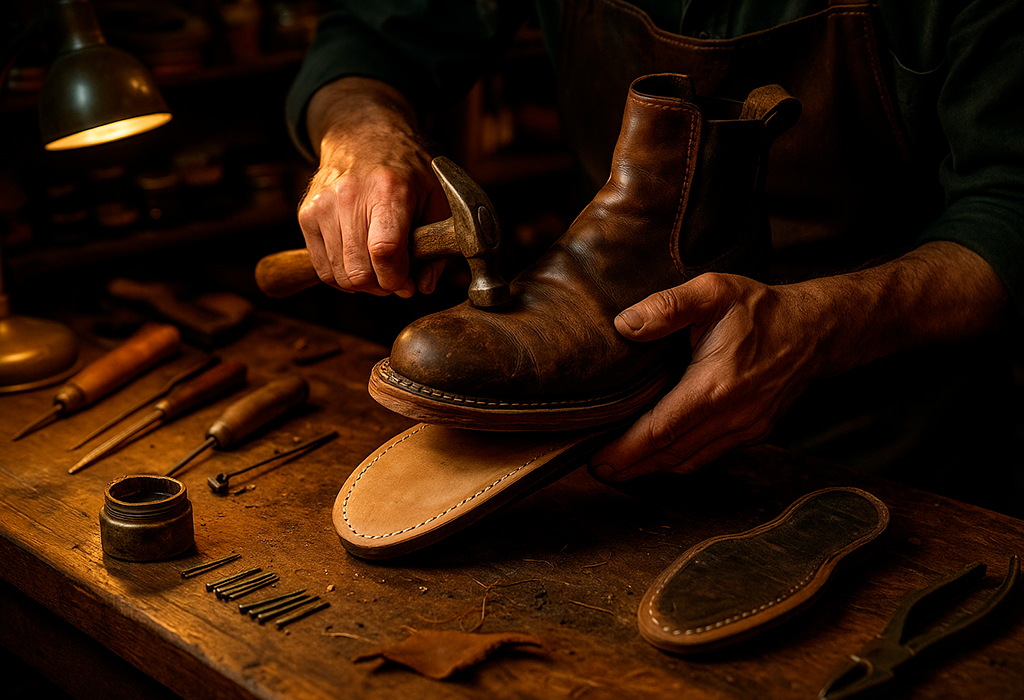
How to Choose the Perfect Boot: A Comprehensive Guide for Men
There’s something timeless about a man in boots. They’re not just functional — they send a message: this guy has his act together.
But the boot aisle isn’t exactly straightforward. From Chelsea to Chukka, full-grain leather to synthetic soles, it’s easy to get lost. That’s why I put this guide together — so you can cut through the noise and find the perfect pair of boots for your life, style, and goals.
Step 1: Start With Your “Why”
Before you start browsing brands or styles, step back and ask: Why do I even want boots in the first place?
This isn’t about being philosophical — it’s about making a smart investment. Buying boots without knowing your intended use is like buying a car without knowing if you’re commuting or off-roading.
Start by answering these:
Do I need boots for everyday wear or special occasions?
Am I in a city, on a farm, or somewhere in between?
Do I face snow, rain, heat — or all of the above?
Knowing your purpose narrows your choices and ensures you won’t end up with a beautiful pair that never leaves the closet.
Step 2: Match the Style to Your Life
Every boot has its own personality — just like every man. The key is picking a style that complements your life.
If your weeks are filled with meetings and dinner dates, a rugged hiking boot won’t make sense. But if you split wood on weekends and spend your weekdays on the go, a suede Chelsea boot might not hold up.
Let’s break down your main options:
Chelsea Boots – Sleek and easy to wear. Dress them up or down.
Chukka Boots – Clean, minimal, and versatile. Excellent all-rounder.
Dress Boots – Polished and refined. A step up from dress shoes in colder weather.
Work Boots – Built tough for rough days and rugged style.
Western Boots – Bold and unmistakable. Best worn with confidence.
Hiking Boots – High function. Surprisingly stylish when paired well.
Pro tip: If you're only getting one pair, start with Chelseas or Chukkas. They cover 80% of your day-to-day.
Think of material as the DNA of your boots. It determines how they age, how they feel, and how they handle weather.
Different leathers — and synthetics — serve different needs. What you gain in texture or breathability, you might lose in water resistance or formality.
Here’s a breakdown:
Full-Grain Leather – The toughest and best-looking over time. This is heirloom-level stuff.
Top-Grain Leather – Easier to maintain and slightly more affordable.
Suede – Soft, casual, and stylish. A texture play — but keep it away from rain.
Synthetic – Affordable and weatherproof, but often sacrifices breathability and long-term style.
Material matters. If versatility is your goal, leather wins every time.
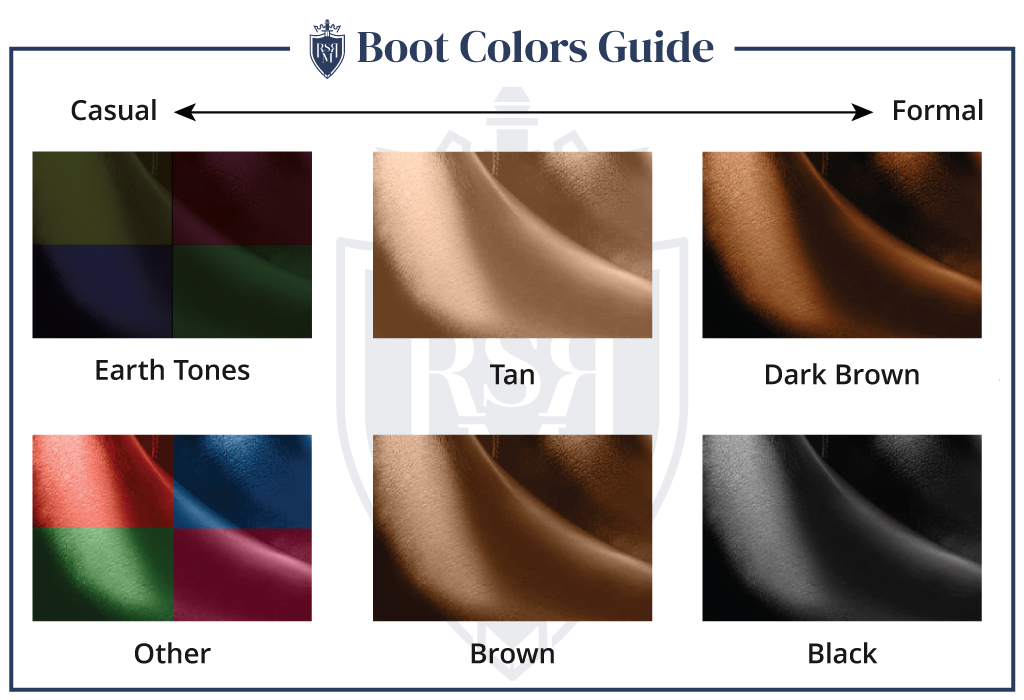
Step 4: Nail the Color
Color speaks before the rest of your outfit does. Choose wisely, and your boots will match most of your wardrobe effortlessly.
Stick to neutral tones first. They’re timeless, masculine, and play nice with everything from denim to wool trousers.
Here’s your color roadmap:
Black – Sleek, formal, and a little edgy. Pairs perfectly with darker wardrobes.
Brown – Earthy, classic, and ultra-versatile. From jeans to navy suits.
Tan/Cognac – Brighter and bolder. Great for casual, confident looks.
Gray or Burgundy – Unique without being loud. A stylish second or third pair.
Starting from scratch? Go dark brown. It’s the boot equivalent of navy — goes with nearly everything.
Step 5: Don’t Overlook the Sole
Think of soles like tires. You wouldn’t put racing slicks on an off-road truck — so don’t mismatch your soles to your lifestyle.
A sole affects not just traction, but also the formality, comfort, and lifespan of your boot.
Options include:
Leather Soles – Dressy and sleek, but slippery and less durable.
Rubber Soles – Grippy, water-resistant, great for everyday wear.
Lug Soles – Thick treads for grip and rugged appeal.
Crepe Soles – Soft and casual, perfect for laid-back style.
If you live in a rainy or snowy area, go rubber or lug. Leather soles are for dry, dressed-up days.
Step 6: Fit Comes First
A good fit isn't negotiable — it's foundational. Uncomfortable boots are boots you’ll dread wearing.
Fit is where function meets comfort. Always try them on with the socks you’ll wear regularly. Walk around. Feel for pinching, heel slippage, or pressure on your arches.
Checklist for comfort:
Snug at the heel, roomy in the toe box.
Zero pinching or hot spots.
Insoles that support your arch (or allow you to add your own).
If you have to “hope they'll stretch,” they’re not the right fit.
Start with one versatile pair — like a brown Chelsea or Chukka. From there, build based on lifestyle. A smart three-boot rotation covers most men:
1 pair for smart-casual (Chelsea or Chukka)
1 rugged/work pair (Combat or Moc Toe)
1 formal pair (Dress boot or black leather lace-up)
If you wear boots daily? Add seasonal pairs for weather and occasion.
Are suede boots worth it?
Yes — but only if you wear them smart. Suede adds texture and elegance to casual outfits, but it hates water. Stick to dry weather, use a suede brush, and apply protectant spray. Treat them well, and they’ll turn heads.
What’s the difference between a $100 boot and a $300 boot?
In one word: longevity.
$300 boots usually offer:
Full-grain leather that ages beautifully
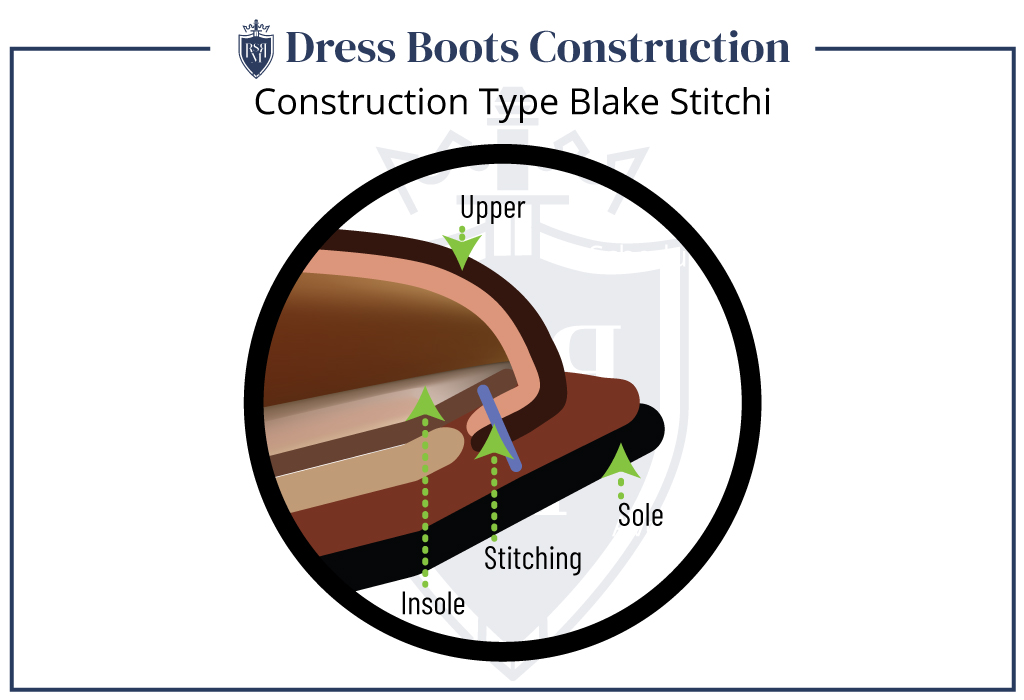
Resoleable construction (Goodyear welt or Blake stitch)
Better arch support and fit
More refined style and shape
The $100 boot may look okay for a season, but it’s rarely built to last.
Can I wear boots with a suit?
Absolutely — if it’s the right kind of boot. Stick with sleek, minimal styles like:
I'm Antonio Centeno, the founder of RMRS. I'm a former Marine Corps Officer with a BA in Evolutionary Biology and Philosophy (Cornell College 98') and an MBA from The University Of Texas at Austin (07'). I studied the Science of Style in London, Hong Kong, and Bangkok and have created over 5000 videos/ articles to help men dress better. Click here to discover more about me and our mission here at RMRS.
Ready to earn more money and command respect with the right clothing? Want to start dressing sharp today? Click here to discover The Style System , the BEST Professional Style Course on the planet!