
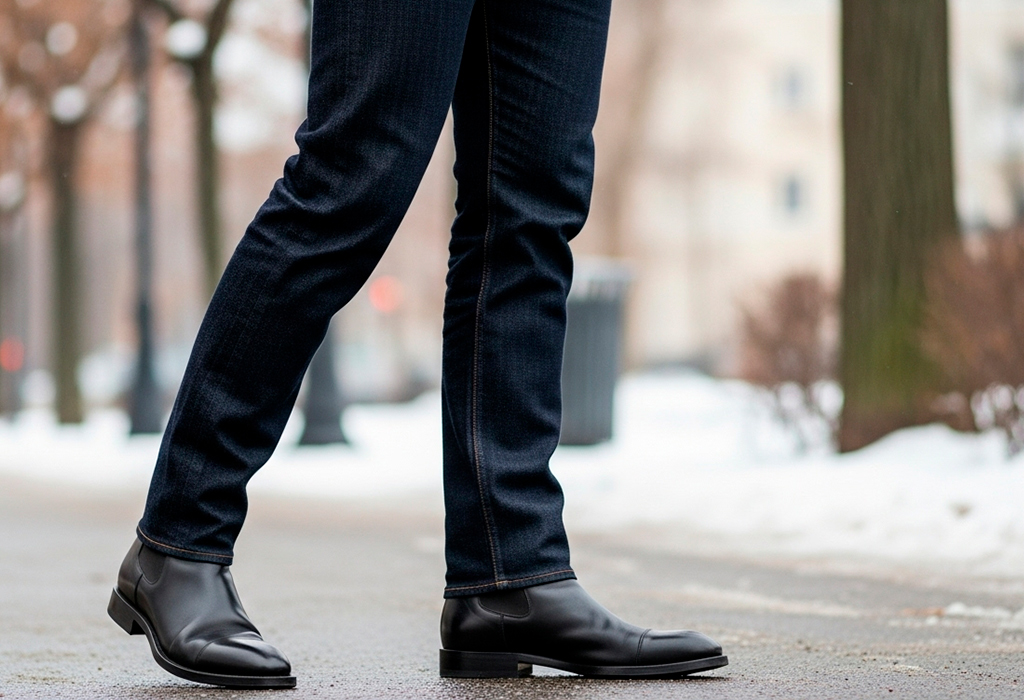
Jeans are a year-round staple—but not all denim is built for freezing mornings, icy sidewalks, or damp spring mud.
When the seasons shift, your denim needs to shift too. Thin, breezy summer jeans won't cut it when the wind bites and the temps drop.
From fleece-lined pairs for deep winter to rugged midweight denim for unpredictable spring showers, the right jeans will keep you warm, comfortable, and looking sharp in every season.
In this guide, you'll learn:
- Which denim weights and fabrics trap warmth best
- The pros and cons of lined jeans vs layering strategies
- How to choose the right fit for comfort and thermal performance
- What colors, cuts, and cuffs work with boots and layers
- Cold-weather brand recommendations and layering tips that actually work
Let’s break it down—because freezing legs neither make a good impression nor are good for your health.
Cold Weather Jeans Tip #1: Go Heavy or Go Home

The first step in winter-proofing your jeans? Weight.
Lightweight denim (under 10 oz) might breathe well in summer, but it does little to block wind or retain body heat in colder months. In contrast, heavyweight denim (12–16 oz) provides a thicker barrier between your skin and the elements.
Why go heavy?
- Better insulation: Denser fabric traps body heat.
- More structure: Holds shape better with boots or layered tops.
- Longer wear life: Heavy denim resists abrasions, snow salt, and wet friction.
Tip: Raw or selvedge denim is often heavier by default and stiff at first—perfect for blocking wind. Just give it time to break in, and it becomes both rugged and personal.
#2: Flannel & Fleece-Lined = Instant Insulation
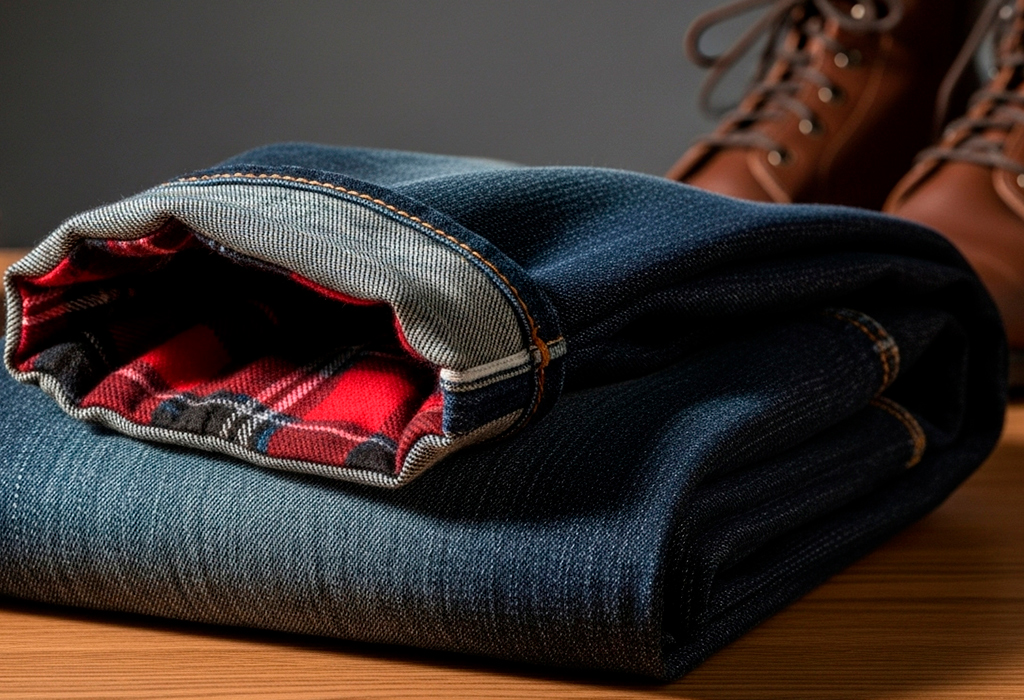
Want jeans that feel like sweatpants—but still look like jeans?
Flannel and fleece-lined options offer an instant upgrade for bitter-cold days, especially when you’re outside for long stretches.
Two main types of lining:
- Flannel-lined: Softer, slightly breathable, perfect for dry cold.
- Fleece-lined: Thick, plush, and ideal for wind-chill or snow.
Best for: Outdoor work, rural living, dog walks, tailgates, or freezing commutes.
Avoid during spring: Too warm for transitional weather—save these for November to February.
Pair with: Rugged work boots, a heavyweight flannel or chore coat, and a thermal undershirt.
#3: Stick With Straight Or Tapered Cuts

Fit matters more in cold weather—not just for style, but for warmth.
Too tight and you can’t layer. Too loose and you trap cold air. The sweet spot? A balanced cut that allows for movement and room underneath, while maintaining a clean silhouette.
Best cold-weather fits:
- Straight-leg: Classic and versatile. Fits over base layers and boots.
- Athletic taper: Ideal for men with thicker thighs, narrows below the knee without restricting mobility.
Avoid skinny jeans: Hard to layer under, restrict circulation (read: you’ll get colder faster), and can look off with bulkier jackets or boots.
Layer like a pro: Use thin thermals like Uniqlo HeatTech or Merino wool long johns under a straight leg—nobody will notice, but your legs will thank you.
#4: Watch The Wash
Color isn’t just about style—it plays a role in warmth, practicality, and seasonal transitions.
Darker washes absorb sunlight and hide stains better, while lighter tones feel more spring-appropriate.
Best washes by season:

Fall:
- Medium indigo
- Earthy brown
- Charcoal gray
Pairs great with flannel, vests, and suede boots.

Winter:
- Deep indigo
- Black
- Raw denim
Hides salt and slush stains, and looks sharp with wool overcoats or leather jackets.

Spring:
- Light indigo
- Washed gray
- Olive or muted tones
Add freshness without looking summery. Works well with field jackets, denim-on-denim, or cotton bombers.
Extra: Darker shades can absorb more sunlight, offering minor warmth boosts on bright winter days.
Cold Weather Jeans Tip #5: Mind the Cuff — And Your Boots
Cold air, slushy sidewalks, and exposed ankles? No thanks.
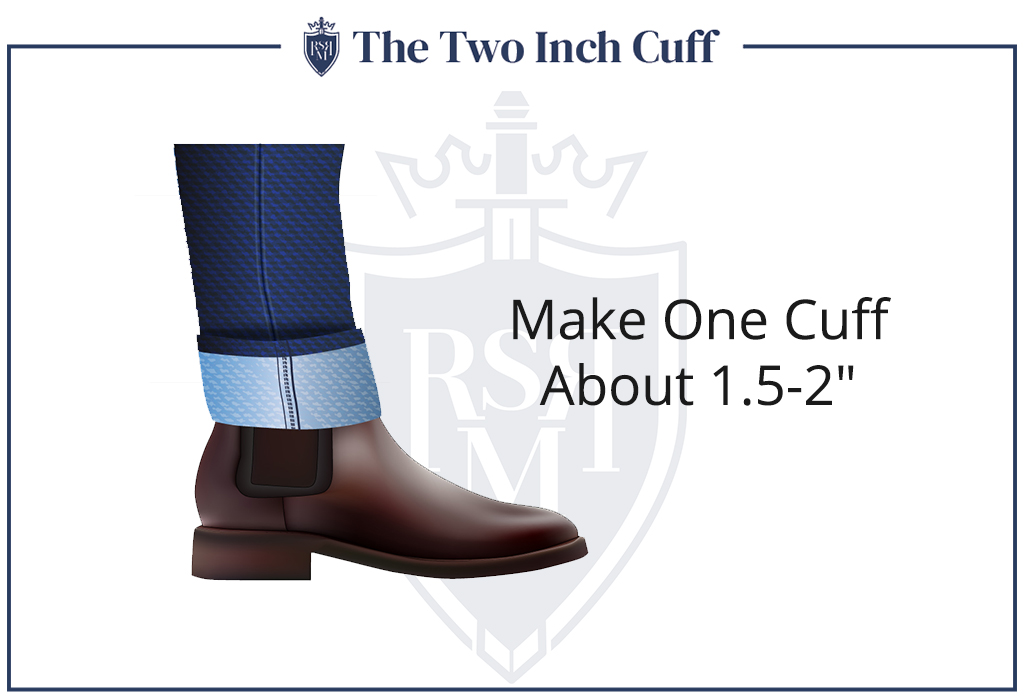
Your jeans need to work with your boots to seal out drafts and keep warmth in. That starts with proper length and hem style.
Tips for cold-season cuffs:
- Go longer: Jeans should break slightly over your boots. Sitting down shouldn't expose socks.
- Choose boot-friendly hems: Straight-leg or bootcut slips easily over insulated footwear.
- Roll strategically: A single, firm cuff over thick socks works. But avoid flashy cropped cuffs in winter—it defeats the purpose.
Pro Layering Stack:
Long wool sock ? thermal base layer ? denim hem over boot ? dry, warm, stylish legs.
#6: Try Denim Blends for Flex & Warmth

Modern jeans don’t have to be 100% cotton—in fact, in colder climates, sticking to pure cotton can leave you stiff, soggy, and freezing.
Advances in textile tech mean you can get the classic denim look with enhanced stretch, faster drying, and built-in insulation. These smart blends keep your legs warm and mobile—ideal for guys on the go.
Look for fabric blends like:
- 98% cotton / 2% elastane — Flexible, slightly warmer, great for mobility and squatting down without resistance.
- Cotton-poly blend — Traps heat better than straight cotton and dries faster if you get caught in sleet or slush.
- Merino-lined blends — Rare but gold: Merino wool offers natural warmth and odor control inside rugged denim shells.
Brands like DUER, Carhartt, and Levi’s ThermAdapt have cold-weather denim lines built with these high-performance fabrics in mind.
#7: Have a Transitional Pair for Spring & Fall

Cold weather doesn’t just mean deep winter—those in-between months matter too.
You’ll need a pair that handles chilly mornings and sunny afternoons, rain showers and wind gusts—without overheating.
Ideal “shoulder season” jeans:
- Midweight denim (10–12 oz)
- Slight stretch for all-day comfort
- Breathable, quick-drying cotton blends
- Washes like slate gray, olive, or mid-indigo that match transitional colors
These jeans go with:
- Hoodies, shackets, light bombers in spring
- Flannels, vests, field jackets in fall
One-pair strategy: Keep these by the door during October and March—they’ll be your MVPs in unpredictable weather.
Bonus: Best Cold Weather Jean Brands (Tried & True)
Short on time? These brands have built reputations for winter-ready denim:
- Carhartt Rugged Flex – Legendary durability, fleece/flannel lined options, built for hard use.
- Duluth Trading Co. Ballroom Jeans – Extra gusseted comfort and freedom of movement.
- Levi’s 541 + ThermAdapt – Athletic fit, weather-adaptive denim, widely available.
- Wrangler RIGGS Workwear – Tough, warm, and affordable with reinforced seams.
- DUER Fireside Denim – Stylish slim fit with performance fleece lining.
- Bonobos Flannel-Lined Denim – Sleek enough for business casual in colder climates.
FAQ: Cold Weather Denim Questions
Can I wear jeans in snow?
Yes—but pair with insulated boots and preferably wear lined jeans or thermal layers underneath.
What temperature is too cold for jeans?
Below freezing (32°F / 0°C), unlined jeans may not cut it without thermals. Once it hits the teens or single digits, go lined or layer up.
How do I layer under jeans without bulk?
Use thin, heat-retaining base layers like Uniqlo HeatTech, Merino long johns, or even silk thermals under a straight cut jean.
What color jeans look best in winter?
Dark indigo, black, and charcoal hide grime and match heavier outerwear. Save light washes for spring.
Should I cuff jeans with boots?
Yes—but keep the cuff minimal and clean. You want coverage, not ankle exposure. Stick with one or two tight rolls max.