
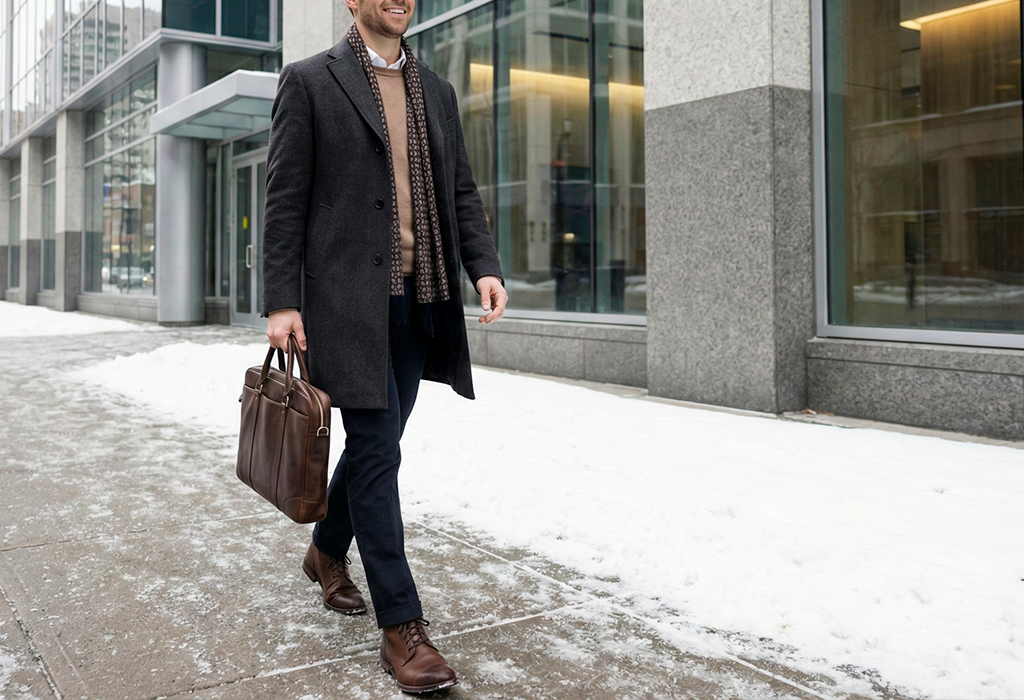
You walk into the office. The thermostat says 70—but it might as well be Siberia. Your fingers are numb, your nose is red, and that “stylish” cotton blazer isn't doing you any favors.
I’ve been there.
Years ago, I was stationed in the Midwest during a particularly brutal winter. We wore uniforms that looked sharp but offered about as much warmth as a sheet of paper. That’s when I realized: dressing for professionalism doesn’t mean you have to suffer through the cold.
In this article, I’m going to show you how to build a winter business casual wardrobe that actually keeps you warm—and still earns nods of respect around the office.
Let’s fix your freezing problem without sacrificing style.
1. The #1 Mistake Men Make in Winter Business Casual
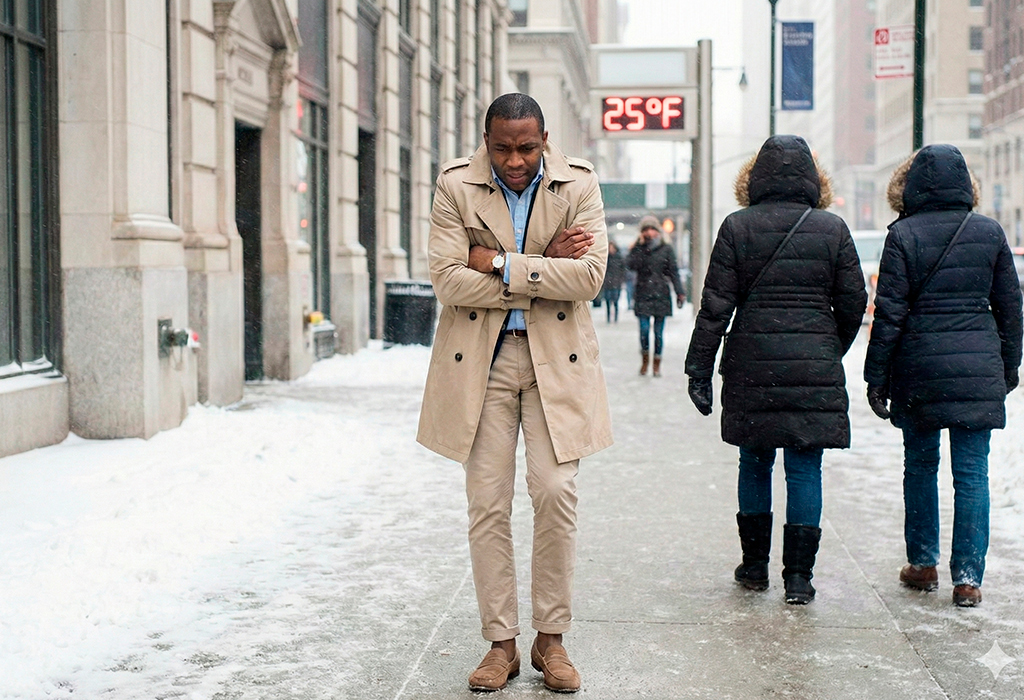
Most guys approach winter layering the same way they approach summer suiting: they grab something that looks “business-appropriate” and assume it'll work in the cold.
Here’s the catch: traditional business casual fabrics—cotton chinos, lightweight dress shirts, unlined blazers—aren’t made for winter. They're great for mild temps, but they trap cold air when it dips below freezing.
If you're going to stay warm without dressing like you’re headed to shovel snow, you need to rethink both your materials and your layering strategy.
2. Warm Fabrics That Look Sharp

Let’s start with your core protection: fabric choice.
If your office wardrobe is built around cotton, you’re already at a disadvantage. Cotton is breathable, sure—but it holds moisture and has poor insulation.
You need insulating fabrics that still look professional:
Best winter fabrics for business casual:
- Wool flannel – soft, insulating, and refined; perfect for trousers and sport coats
- Merino wool – thinner than lambswool, breathable, ideal for sweaters or long-sleeve layering
- Tweed – rugged but office-ready in the right cut; pairs well with dress shirts
- Brushed cotton – warmer than regular cotton and great for OCBDs (Oxford cloth button-downs)
- Corduroy – ribbed texture adds insulation and depth to your outfit
- Cashmere – luxury warmth; expensive, but unbeatable for lightweight layering
3. Layering Without Bulk: How Smart Men Build Warmth

Forget Michelin Man layers. This is about insulation, not volume.
Here’s how I layer when I want to look sharp and stay warm:
Base Layer:
A thermal undershirt or merino long sleeve tee. It’s invisible, adds warmth, and doesn’t mess with your silhouette.
Shirt Layer:
Go with a brushed cotton or Oxford cloth button-down. These have more texture and warmth than your average dress shirt.
Mid Layer (Optional):
A lightweight merino sweater or a fine-gauge cardigan. Adds warmth and visual depth.
Top Layer:
A sport coat or unstructured blazer in wool, flannel, or tweed. Structured enough for the office, soft enough for comfort.
Outerwear:
You’ll need this for your commute—but more on that in Section 5.
Pro tip: Tuck a pocket square in that tweed blazer. It's functional and signals attention to detail.
4. Don’t Skip the Thermals: Your Hidden Winter Power Move

Let’s talk about something most guys overlook: your base layer.
When it’s 10 degrees outside and the office HVAC isn’t cutting it, thermal underwear gives you stealth warmth without changing your outer look.
Best thermal underwear for business casual:
- Merino wool base layers – lightweight, odor-resistant, and won’t overheat indoors
- Synthetic thermal tops (poly/spandex blends) – affordable, moisture-wicking, and discreet under dress shirts
- Fitted thermal leggings or long johns – perfect under trousers, especially for longer commutes
Make sure the fit is close to the body so it doesn’t bunch or create visible lines. No one in the office should even know you’re wearing an extra layer.
5. Business Casual Pants That Don’t Freeze Your Legs Off
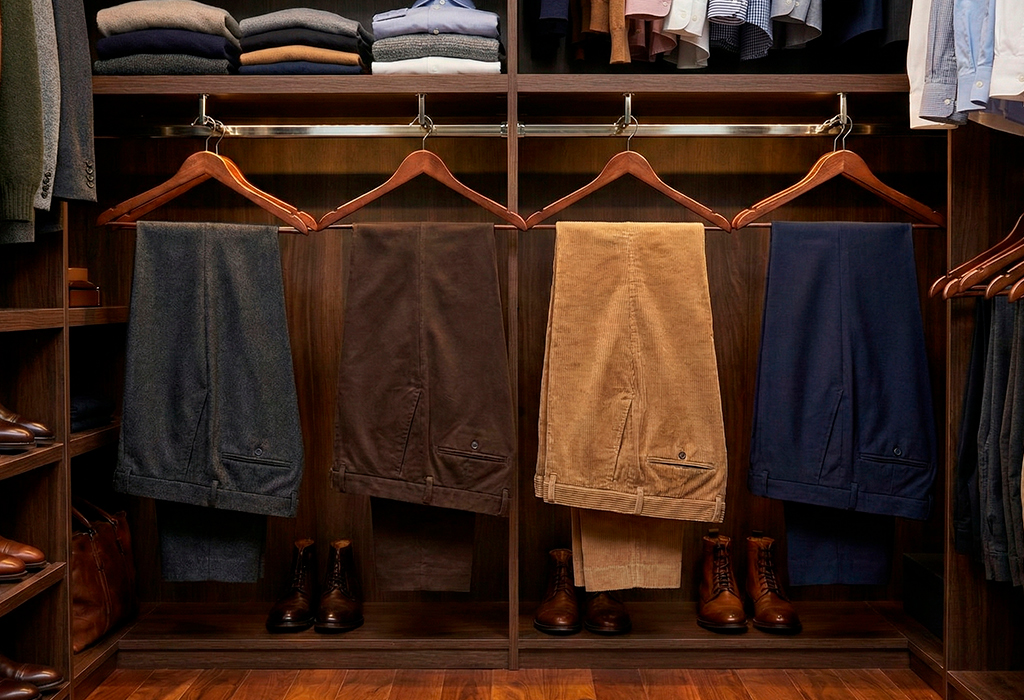
Let’s talk about the bottom half—where most men suffer in silence.
Thin cotton chinos and dress pants are wind tunnels in disguise. If you’re walking outside or sitting near a drafty window, you need pants with some heft.
Winter-worthy trouser options:
- Wool flannel trousers – timeless, warm, and comfortable all day
- Heavyweight chinos – brushed or twill cotton in dark neutrals (olive, brown, navy)
- Corduroy pants – stylish and practical; go for a slim-straight cut
- Wool-blend dress pants – great for formal workplaces with stricter dress codes
And if it’s sub-zero and you’re commuting on foot? Thermal long johns under your trousers are a game-changer. No one will see them—but your legs will thank you.
6. Dress Socks That Actually Keep Your Feet Warm

A sharp outfit means nothing if your feet are frozen.
This is where a lot of men make a critical mistake. They wear regular cotton socks with leather dress shoes in winter. That combo equals cold, damp, and miserable.
Best socks for cold-weather business wear:
- Merino wool dress socks – the gold standard: breathable, moisture-wicking, and warm
- Thicker wool-cotton blends – great for boots, still office-appropriate
- Over-the-calf fit – prevents sagging and adds coverage when sitting
Avoid athletic socks. They’ll either be too bulky or look unprofessional if they peek out. Choose darker tones—gray, navy, brown, or black—to match your pants and shoes.
Pro tip: Pack an extra pair in your briefcase. Dry feet = happy feet, especially if you step in slush during your commute.
7. Shoes That Beat the Cold Without Breaking Dress Code

Leather soles and freezing sidewalks don’t mix.
You want footwear that’s stylish, but with enough grip and insulation to handle winter streets.
Recommended winter business casual shoes:
- Leather boots (with rubber soles) – Chelsea, cap-toe, or chukka boots in dark brown or black
- Waterproof brogues or derbies – look formal, function like winter shoes
- Insulated dress boots – brands now make office-appropriate boots with hidden insulation
Always wear wool socks. Cotton will leave your feet cold and damp by noon.
Pro tip: Invest in a quality leather protector. Salt stains on your boots ruin the sharp look you worked hard to build.
8. The Office-Ready Outerwear Equation

Your coat might only be seen between the parking lot and the elevator—but it still matters.
Don’t throw a puffer jacket over a business casual outfit and expect it to blend. The cut, fabric, and style should complement your outfit, not clash with it.
Best outerwear options for winter business casual:
- Wool topcoat – sleek, structured, and warm. Works beautifully over blazers and sweaters.
- Peacoat – shorter length, military heritage, still professional
- Car coat – minimal detailing, mid-thigh length, easy to layer
- Quilted field jacket (for smart casual offices) – stylish but leans more relaxed
Avoid sporty down jackets unless your office is casual-casual. Stick with neutral colors—camel, navy, charcoal, dark green.
9. Accessories That Add Warmth (Without Looking Out of Place)

Accessories aren’t just flair—they’re functional in winter.
Essential cold-weather accessories:
- Wool or cashmere scarves – keep your neck warm and elevate your look
- Leather gloves (lined) – professional and practical; black or dark brown work best
- Wool beanies or fedoras (if appropriate) – keep it subtle and dark-colored
- Briefcase or messenger bag – leather or canvas to complement your outfit
Avoid anything too casual—like ski gloves or logo-heavy hats—unless you're commuting far and changing when you arrive.
Wrap-Up: Warmth and Style Can Coexist

If you’ve ever felt stuck between freezing in thin layers or looking out of place in bulky outerwear, it’s time to upgrade your winter business casual strategy.
The formula is simple:
- Start with warm, insulating fabrics.
- Master strategic layering (including thermals and socks).
- Choose footwear and outerwear that work in real winter conditions.
Done right, you won’t just stay warm—you’ll stand out as the man who understands how to dress with both function and class.
Need more help? Join the Real Men Real Style Skool Community—where smart, style-focused men swap tips, share outfit inspiration, and get direct feedback from Antonio and the RMRS team.
Stay sharp. Stay warm.