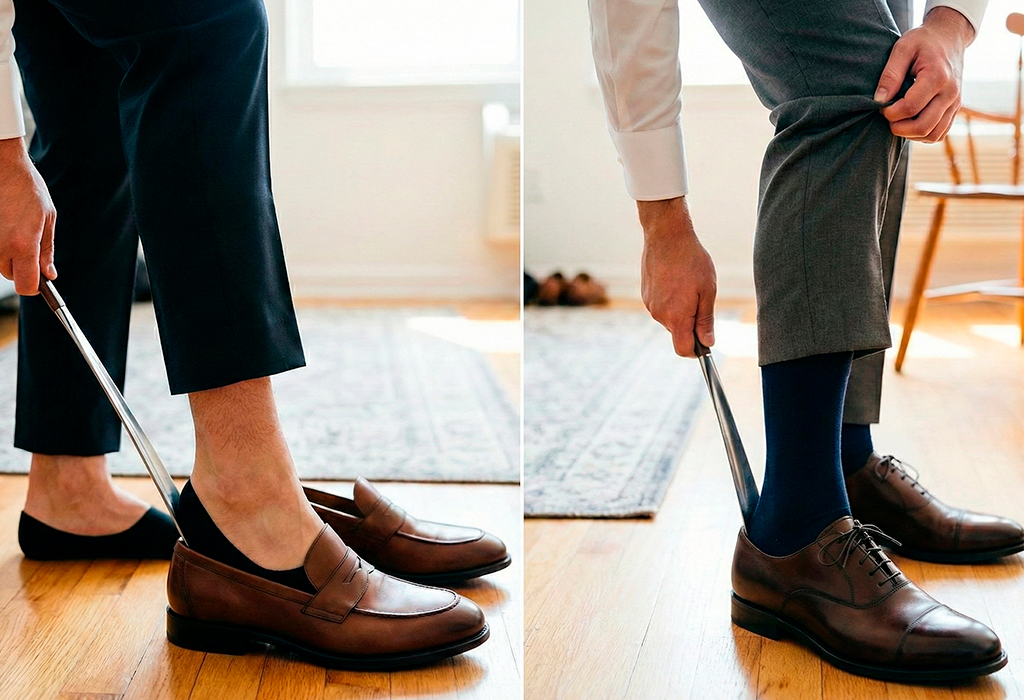
I can tell how dialed-in a man is by one thing most people ignore: his socks.
Not the price. Not the pattern. The length.
Because sock length is where good outfits quietly fall apart. You’re standing there thinking you nailed it… then you sit down in a meeting and boom—bare leg between your trouser and your dress shoe.
Or you wear thick crew socks with sleek loafers and suddenly your lower leg looks chopped in half. Or your no-shows keep sliding under your heel and now you’re doing that little “toe curl” inside your shoe all day trying to keep them in place.
And here’s the thing—none of this is complicated. Most guys just never got the rules explained in plain English. So in this sock length guide for men, I’m going to show you exactly what to wear with every shoe type, how to avoid the common mistakes, and how to fix your sock drawer without buying a hundred pairs.
The Sock Length Cheat Sheet (Save This)

Let’s start simple. If you want the right sock length fast, use this like a map. Then I’ll explain the “why” so you can adjust based on your outfit and the situation.
- No-show / liner socks: loafers, driving shoes, boat shoes, low-profile casual sneakers
- Ankle socks: athletic sneakers, gym shoes, casual low-top sneakers (especially in heat)
- Crew socks: casual sneakers, high-top sneakers, casual boots, work boots
- Mid-calf socks: dress shoes, derbies, boots with trousers, business casual looks
- Over-the-calf socks: suits, formalwear, dress shoes with tailored trousers (especially if you’ll sit/stand a lot)
If you’re thinking, “Antonio, why do socks need this many categories?”—they don’t. You just need enough range to handle your most common shoes without creating a weird break in your outfit.
The Real Goal: Control the “Gap” Without Overthinking It

Sock length is really about one thing: the gap.
The gap is that space where your outfit can start looking accidental. You see it when pants ride up, when ankles show at the wrong moment, or when socks visually “cut” the leg line and make you look shorter or boxier.
Here’s the practical reality: most men don’t notice their socks until something goes wrong. You’re not staring at your ankles in the mirror thinking, “Today I’ll choose mid-calf.” You’re getting dressed fast, grabbing what’s clean, and moving on.
So give yourself an easy rule:
When you dress up, you want coverage.
When you dress down, you can show ankle—but it needs to look intentional.
That’s it. That rule alone fixes most sock problems.
Dress Shoes (Oxfords, Cap-Toes, Wholecuts): Mid-Calf or Over-the-Calf
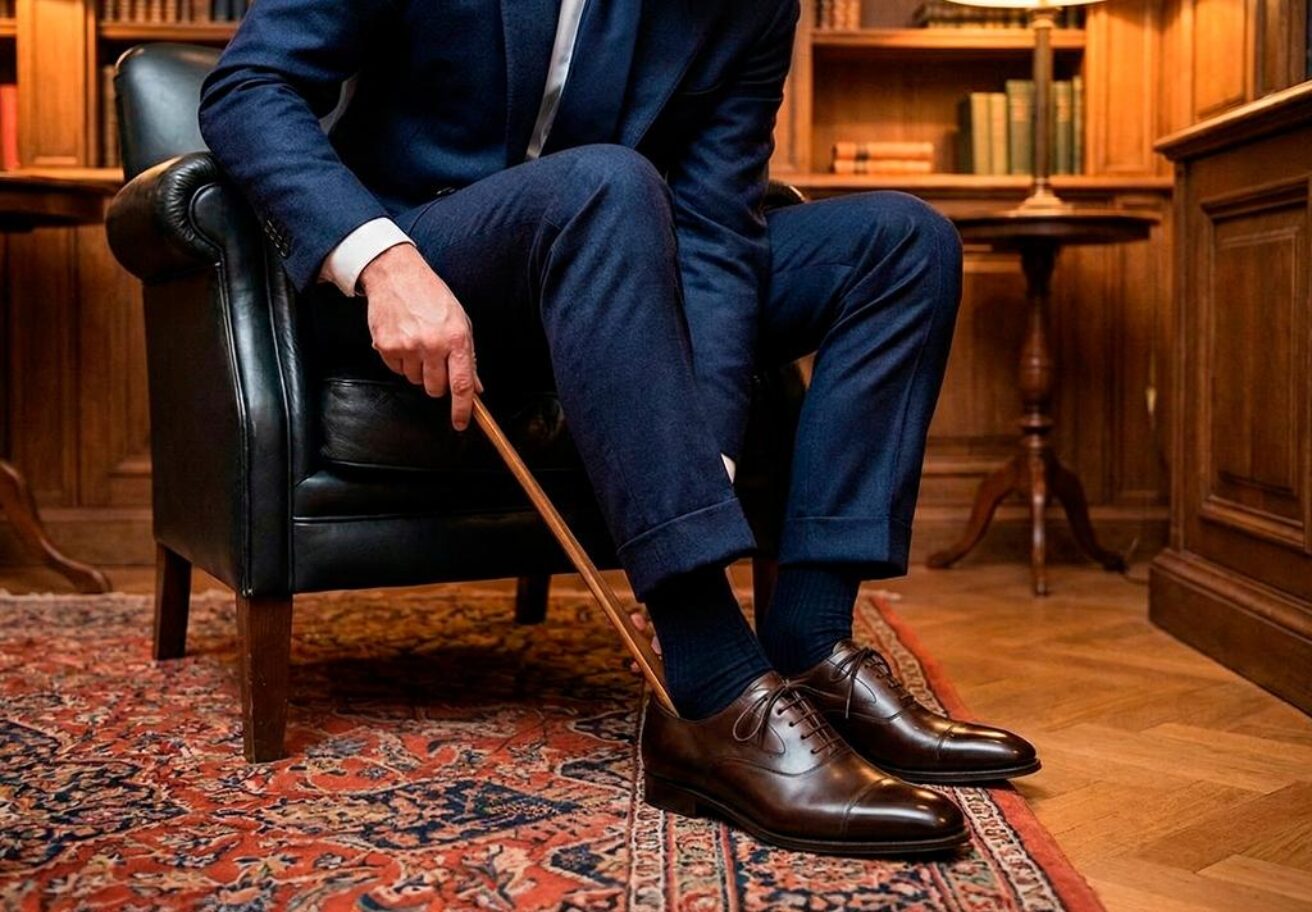
Dress shoes are where sock mistakes show up the hardest, because dress shoes are usually paired with trousers. And trousers move. They rise when you sit. They shift when you cross your legs. They don’t stay perfectly still like they do in the mirror.
Early in my career, I did what most guys do: I wore the socks I already owned. A lot of cotton crews. Standing up? Fine. Sitting down? Not fine. I still remember catching a glimpse of myself in a glass door—dark dress shoe, trouser pulled up, and a strip of bare leg that looked like I forgot part of my outfit.
That’s why mid-calf and over-the-calf socks exist. They’re not “fancy.” They’re functional.
Mid-calf socks cover enough for most normal movement. Over-the-calf is for suits, formal events, and long days where you’re in and out of meetings. They stay up better, they don’t bunch, and they keep that clean line from pant to shoe.
Outfit example: If you’re wearing black oxfords with charcoal trousers, go over-the-calf. The moment you sit down, you’ll be glad you did.
Another one: brown dress shoes with navy chinos for a business casual office day? Mid-calf nails it without feeling overly formal.
Derbies, Bluchers, Monk Straps: Mid-Calf Most of the Time

These shoes live in the middle ground. You can wear them in a more formal way, but you can also wear them like a workhorse shoe with chinos and a sport coat.
That “middle ground” is exactly why mid-calf socks are the sweet spot here. You get coverage when you sit, the sock stays smoother, and it matches the tone of the shoe. You’re saying, “I know what I’m doing,” without turning it into a production.
Over-the-calf still makes sense if you’re wearing a suit or tailored wool trousers. But if your look is more business casual—derbies, chinos, button-down—mid-calf is the move.
Outfit example: If you’re wearing derbies with olive chinos and a navy sport coat, pick mid-calf socks. The outfit is sharp, but not black-tie sharp.
Loafers: No-Show Most of the Time (With One Big Exception)
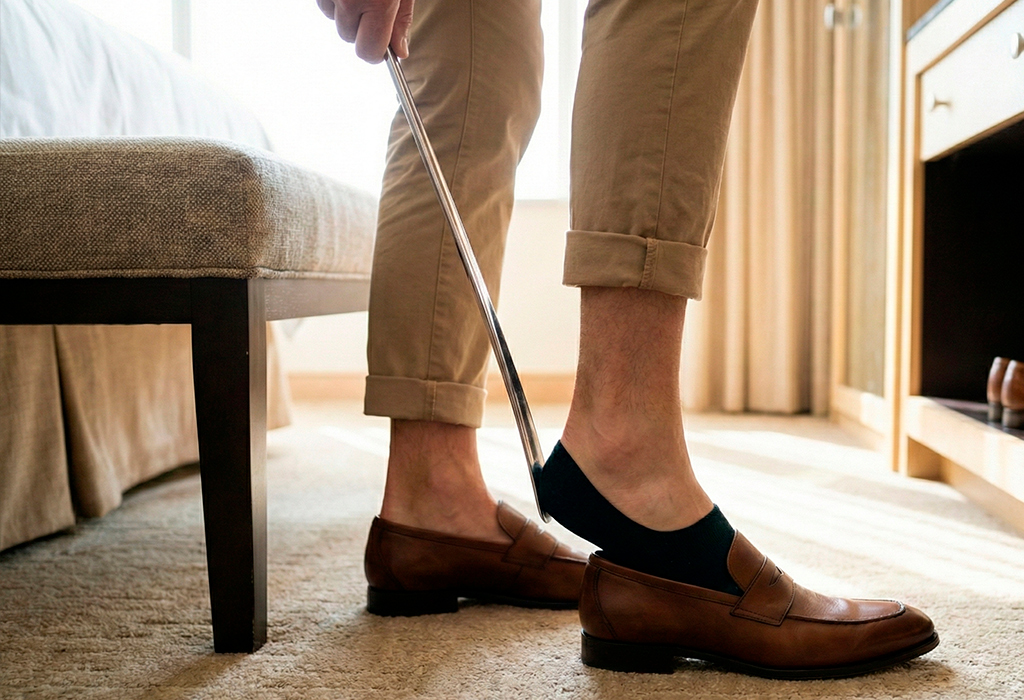
Loafers are where men either look effortlessly sharp… or like they got dressed in the dark.
The classic loafer look is clean, low, and streamlined. That’s why thick socks usually fight the shoe. A chunky crew sock adds bulk, bunches at the ankle, and makes loafers look heavier than they should.
That’s why no-show socks are a lifesaver. You get the sock function—less sweat, less stink, better comfort—without breaking the line of the shoe.
The exception is colder weather or dressier loafers with trousers. If you’re wearing wool trousers and a blazer, and it’s fall or winter, a visible sock actually looks more balanced. In that case, mid-calf works well. It keeps the outfit grounded and avoids that “summer ankle” look when it’s clearly not summer.
Outfit examples: Suede loafers with slim jeans? No-show.
Tassel loafers with wool trousers and a blazer? Mid-calf.
Sneakers: Sock Length Depends on the Sneaker (Not Just the Outfit)

Sneakers are tricky because “sneakers” covers everything from minimalist leather shoes to chunky running shoes to high-tops. The sock should match the sneaker’s vibe and height.
Minimalist white leather sneakers usually look best with no-show or ankle socks. Why? Because the shoe is clean and low profile. A tall sock often interrupts that clean look and makes the outfit feel heavier.
With athletic runners, ankle socks are usually the easiest and most natural choice—especially in warm weather. Crew socks can work too, but that reads more sporty or streetwear. Which is fine, as long as the rest of your outfit supports it.
High-tops are different. High-tops want crew socks. A low sock with a high-top can look unfinished, like you’re missing a piece between the shoe and your leg.
Outfit examples: White sneakers with chinos? No-show or ankle.
High-top Converse with jeans? Crew.
Boots: Crew or Mid-Calf (Choose Based on Pants and Weather)
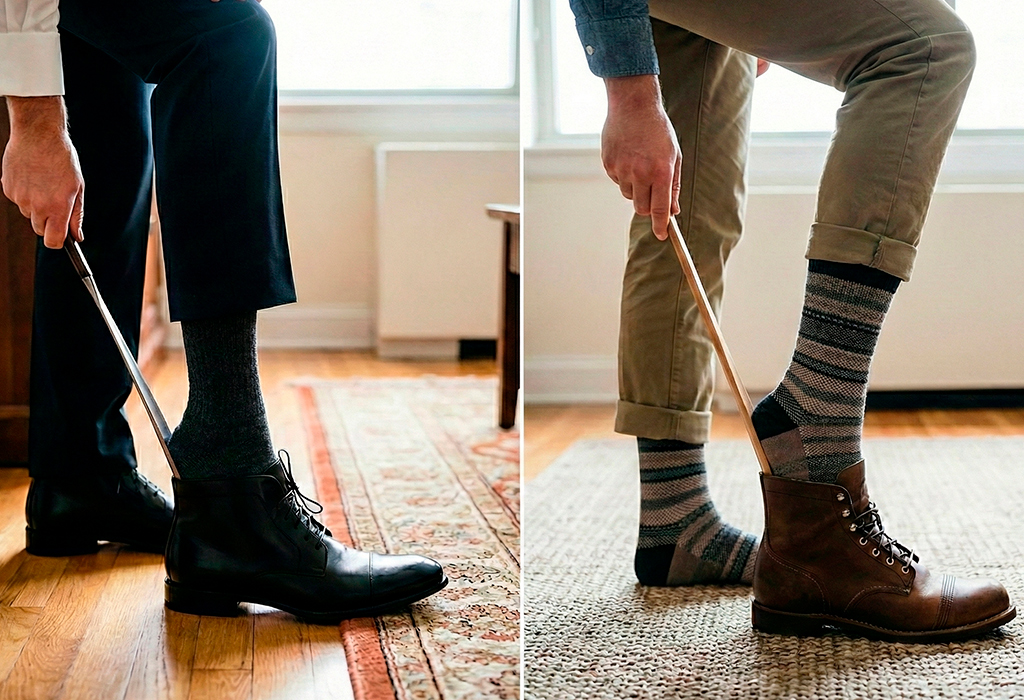
Boots give you more room to work with because the boot covers the ankle. So here the sock is about comfort and function just as much as style.
If you’re wearing boots casually—jeans, flannel, jacket—crew socks are usually perfect. They sit comfortably, they pair naturally with the boot height, and they don’t feel overly “dressy.”
If you’re wearing boots with trousers, especially in a business casual setting, mid-calf tends to look cleaner. It keeps everything smooth and prevents bunching. And in winter, longer socks are just smarter. Cold air finds every gap you give it.
Chelsea boots are a great example. With jeans, crew socks are fine. With trousers, mid-calf looks sharper.
The 3 Sock-Length Mistakes That Make Men Look Off
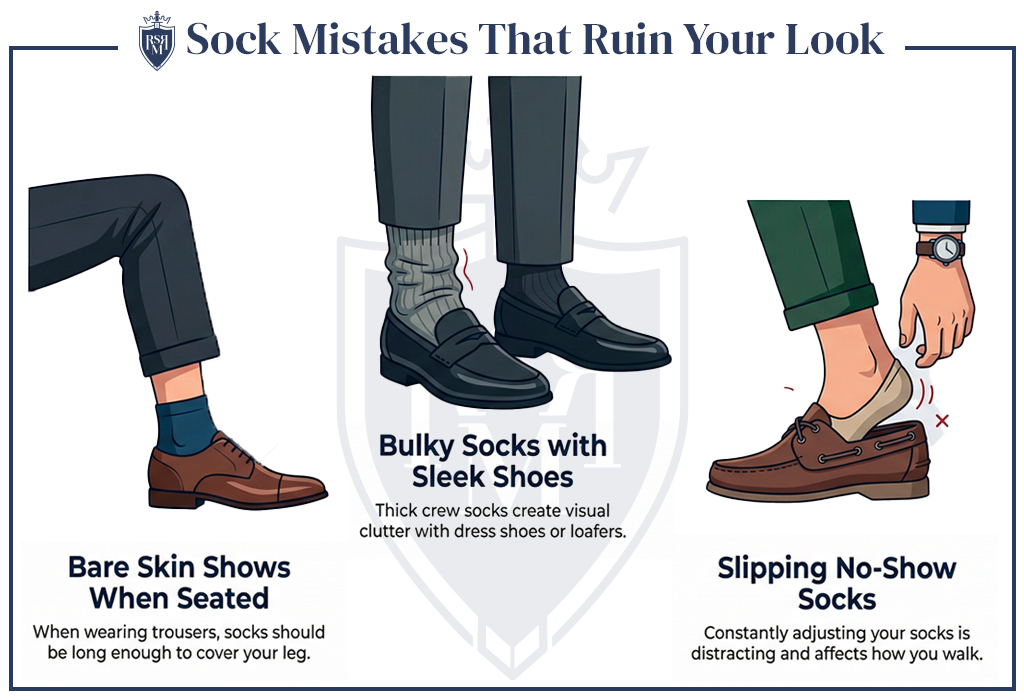
1) Bare skin showing when you sit in dress clothes
This is the big one. If you’re wearing trousers and anything resembling a dress shoe, plan for the seated position. That’s when the outfit gets tested.
2) Thick crew socks with sleek shoes
Crew socks aren’t bad. They’re just not universal. With loafers and dress shoes, thick socks often create bulk and visual clutter.
3) No-show socks that slip
If you’re constantly adjusting your sock, you’re distracted. A slipping sock changes how you walk. It sounds small, but it matters. If liners always slide for you, ankle socks on casual days are a practical upgrade.
Quick Fixes If You Only Own a Few Socks

You don’t need a massive sock collection. You need a small rotation that covers your real life.
If I were building a sock drawer from scratch for the average guy, I’d start like this:
- A few mid-calf pairs in neutral colors for office and dress shoes
- A few no-show pairs for loafers and clean sneakers
- A few crew pairs for casual sneakers and boots
- Add over-the-calf only if you wear suits often
That setup gives you options without turning socks into a hobby.
Edge Cases That Trip Guys Up

Shorts
With shorts, your sock becomes more visible by default. Ankle socks are the easy choice with athletic sneakers. No-show works well with loafers or boat shoes. Crew socks with shorts can work too, but it reads sporty or streetwear, so commit to it.
Tapered or cropped pants
Shorter hems can look great—when they look intentional. If your pants are cropped or heavily tapered, no-show socks with loafers or ankle socks with sneakers can look sharp. Just avoid the awkward half-gap that looks accidental.
Wide-leg trousers
Wider pants carry more visual weight. Longer socks help keep the line clean and avoid making the lower leg look like it “disappears” into the shoe.
Visible logos
Logos pull attention down to your feet. That’s fine in casual or athletic outfits. In business casual or formal outfits, keep socks quieter.
Socks as an accent
If you want to use socks for personality—go for it. Just make sure the rest of the outfit stays controlled. Bright socks plus loud everything else looks messy fast.
Questions Guys Always Ask (Straight Answers)
Are no-show socks childish?
No. They’re a tool. With loafers and clean sneakers, they look modern and intentional. The only time they look off is when they slip or when you wear them in outfits that need more coverage.
Can I wear crew socks with loafers?
You can, but it’s hard to make it look sharp. Crew socks add bulk and fight the loafer’s clean line. If it’s cold or dressier, mid-calf is a better option.
What socks with white sneakers and chinos?
No-show or ankle socks. That combo keeps the outfit clean and helps your proportions look longer.
Do dress socks have to match pants or shoes?
Matching pants is usually the safest because it extends the leg line. Matching shoes can work, especially with dark shoes. If you go patterned, keep the colors tied to the outfit.
How do I stop no-show socks from slipping?
Make sure they’re truly your size and sit high enough on your foot. A lot of guys buy liners that are too big. And if you’re walking all day, ankle socks may be the better call.
Are ankle socks okay with dress shoes if I’m standing all day?
If you never sit, maybe. Real life includes sitting, moving, crossing legs. Mid-calf prevents the problem.
What sock length works best for boots?
Crew with jeans for casual. Mid-calf with trousers for sharper looks or cold weather. Boots and short socks usually end in discomfort.
Can I wear patterned socks in the office?
Yes, as long as the rest of the outfit is controlled. Tight pattern, coordinated colors, and a clean shoe. Keep it intentional.
The Takeaway
- Dress shoes with trousers: mid-calf or over-the-calf
- Loafers: no-show most days, mid-calf when it’s cold or dressier
- Sneakers: match sock length to sneaker style
- Boots: crew or mid-calf depending on pants and weather
- If you’ll sit in tailored pants, don’t risk the bare-calf gap